Inroduction
In the ever-expanding landscape of digital innovation, Virtual Reality (VR) and Augmented Reality (AR) have emerged as transformative technologies, reshaping how we perceive and interact with the world around us. These immersive technologies have evolved far beyond their initial gaming and entertainment applications, finding their way into industries ranging from healthcare and education to manufacturing and marketing. As advancements in VR and AR continue to accelerate, they are poised to revolutionize how we learn, work, and connect with others on a global scale. In this article, we delve into the latest developments in VR and AR, exploring their diverse applications, technological capabilities, and the profound impact they are poised to have on society in the years to come.
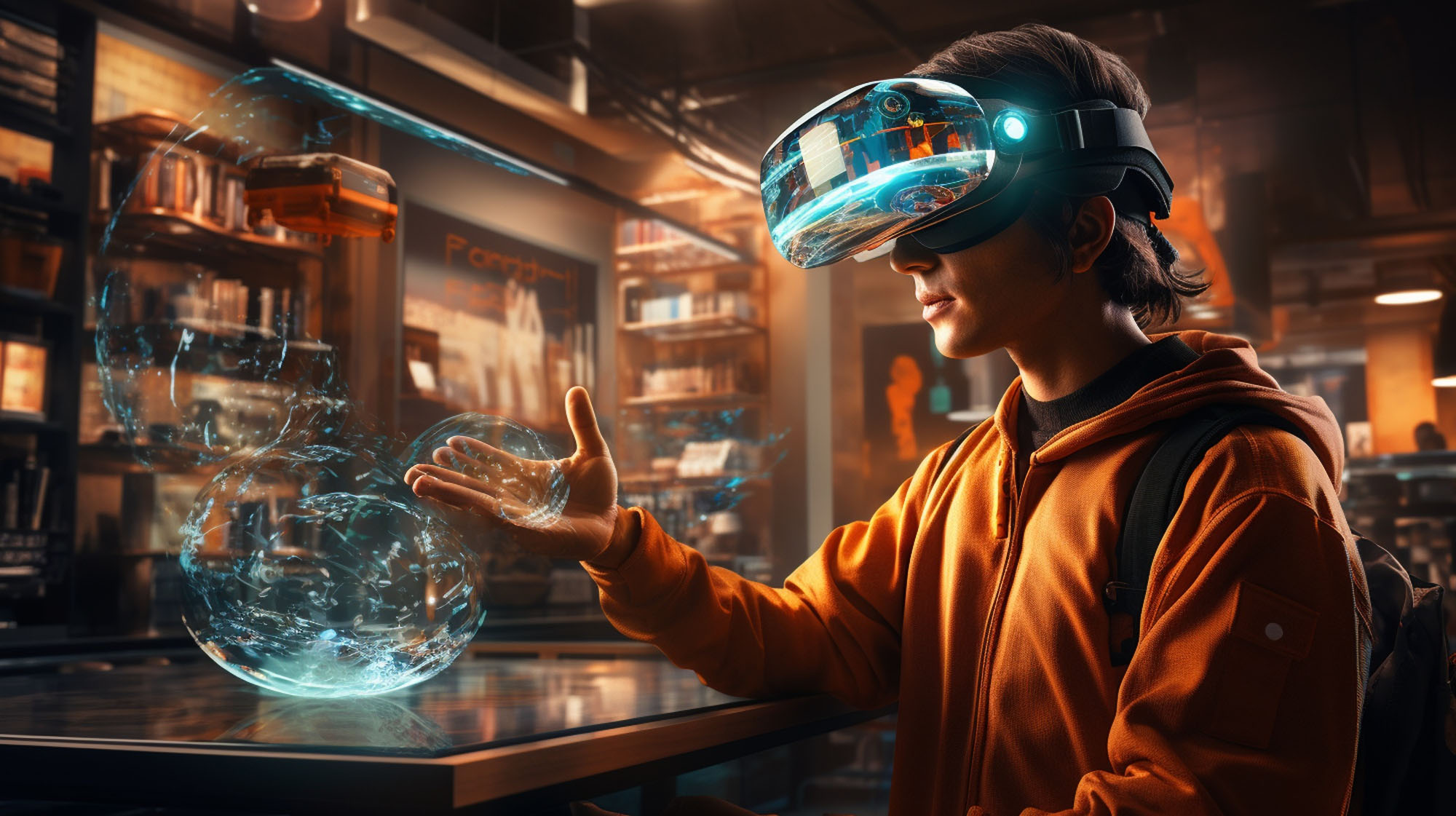
In the ever-evolving landscape of digital technology, Virtual Reality (VR) and Augmented Reality (AR) stand at the forefront of innovation, offering immersive experiences that blur the lines between the physical and digital worlds. As these technologies continue to advance at a rapid pace, they are revolutionizing industries, transforming how we learn, work, and interact with our environment. In this article, we delve into the latest advancements in VR and AR, exploring their applications, capabilities, and the transformative impact they are poised to have on society.
Immersive Experiences:
The realm of immersive experiences offered by Virtual Reality (VR) and Augmented Reality (AR) is continuously expanding, pushing the boundaries of what is possible in digital interaction and engagement. In VR, users are transported to richly detailed virtual environments where they can explore, interact, and manipulate objects in ways previously unimaginable. From traversing fantastical worlds and participating in adrenaline-pumping gaming experiences to undergoing virtual therapy sessions and immersive training simulations, VR offers a breadth of applications that cater to entertainment, education, healthcare, and beyond. Similarly, AR overlays digital content onto the physical world, enhancing our perception of reality and providing contextually relevant information in real-time. Whether used for navigation, education, or marketing, AR technology has the potential to transform how we perceive and interact with our environment, blurring the lines between the digital and physical realms.
Enterprise Applications:
In addition to their consumer-facing applications, Virtual Reality (VR) and Augmented Reality (AR) are increasingly being adopted in enterprise settings, where they are revolutionizing how we work, collaborate, and innovate. In industries such as architecture, engineering, and construction, VR technology enables architects and designers to visualize and iterate on designs in a virtual environment, facilitating better decision-making and reducing costs associated with physical prototypes. Similarly, AR technology enhances productivity and efficiency in fields such as manufacturing and logistics, where workers can access real-time information and instructions overlaid onto their physical environment. By leveraging VR and AR technology, businesses can streamline operations, improve training processes, and drive innovation across a wide range of industries, ultimately enhancing competitiveness and driving economic growth.
Social and Cultural Impact:
Furthermore, the social and cultural impact of Virtual Reality (VR) and Augmented Reality (AR) extends far beyond mere technological innovation, influencing how we perceive and interact with the world around us on a fundamental level. In VR, users have the opportunity to transcend physical boundaries and connect with others in virtual spaces, fostering new forms of social interaction and collaboration. Whether attending virtual concerts, exploring virtual art galleries, or participating in virtual team-building exercises, VR technology enables individuals to forge meaningful connections and shared experiences regardless of geographical distance. This has profound implications for social dynamics, as it challenges traditional notions of space and proximity, opening up new possibilities for global collaboration and cultural exchange.
Moreover, VR and AR have the potential to democratize access to cultural heritage and knowledge, enriching our understanding of history, art, and culture in unprecedented ways. Through immersive experiences such as virtual museum tours, historical reenactments, and interactive storytelling, users can explore distant lands and historical periods, gaining insights and perspectives that transcend traditional educational boundaries. By bringing cultural heritage to life in virtual environments, VR and AR technology make learning more engaging and accessible to people of all ages and backgrounds, fostering a greater appreciation for the richness and diversity of human experience.
Additionally, VR and AR have the power to redefine how we experience entertainment and media, shaping our perceptions of reality and storytelling in profound ways. In VR, users are not mere spectators but active participants in immersive narratives and experiences, where their choices and actions drive the unfolding storyline. From interactive storytelling experiences and virtual theater productions to immersive journalism and documentary filmmaking, VR technology empowers creators to transport audiences to new worlds and perspectives, fostering empathy, understanding, and social awareness. Similarly, AR enhances traditional media formats by overlaying digital content onto the physical world, enriching our engagement with books, magazines, and advertisements with interactive elements and additional context. By blurring the lines between reality and fiction, VR and AR technology challenge our preconceptions and expand our horizons, inviting us to explore new realms of imagination and creativity.
Conclusion:
In conclusion, the advancements in Virtual Reality and Augmented Reality are propelling us into a future where the boundaries between the physical and digital worlds are becoming increasingly blurred. From immersive entertainment experiences and enterprise applications to social interactions and cultural enrichment, VR and AR have the potential to revolutionize how we perceive and interact with our world. As these technologies continue to evolve and mature, they hold the promise of unlocking new realms of possibility, driving innovation, and transforming society in profound and unexpected ways. Whether used for entertainment, education, or enterprise, VR and AR have the power to shape the future of human experience in ways we are only beginning to imagine.
Other Blogs

Safeguarding Digital Frontiers: Navigating Cybersecurity Threats in the Age of Remote Work

Important Web Development Concepts: A Comprehensive Guide

The Most Popular and Trending Programming Languages: A Comprehensive Guide

Balancing Work and Continuous Learning: A Guide for Developers
